
SIM Swaps and 2FA: Why Is an SMS Code Weaker Than a Security Key?
How phone-number takeover helps attackers bypass SMS protection, and what crypto users can use instead.
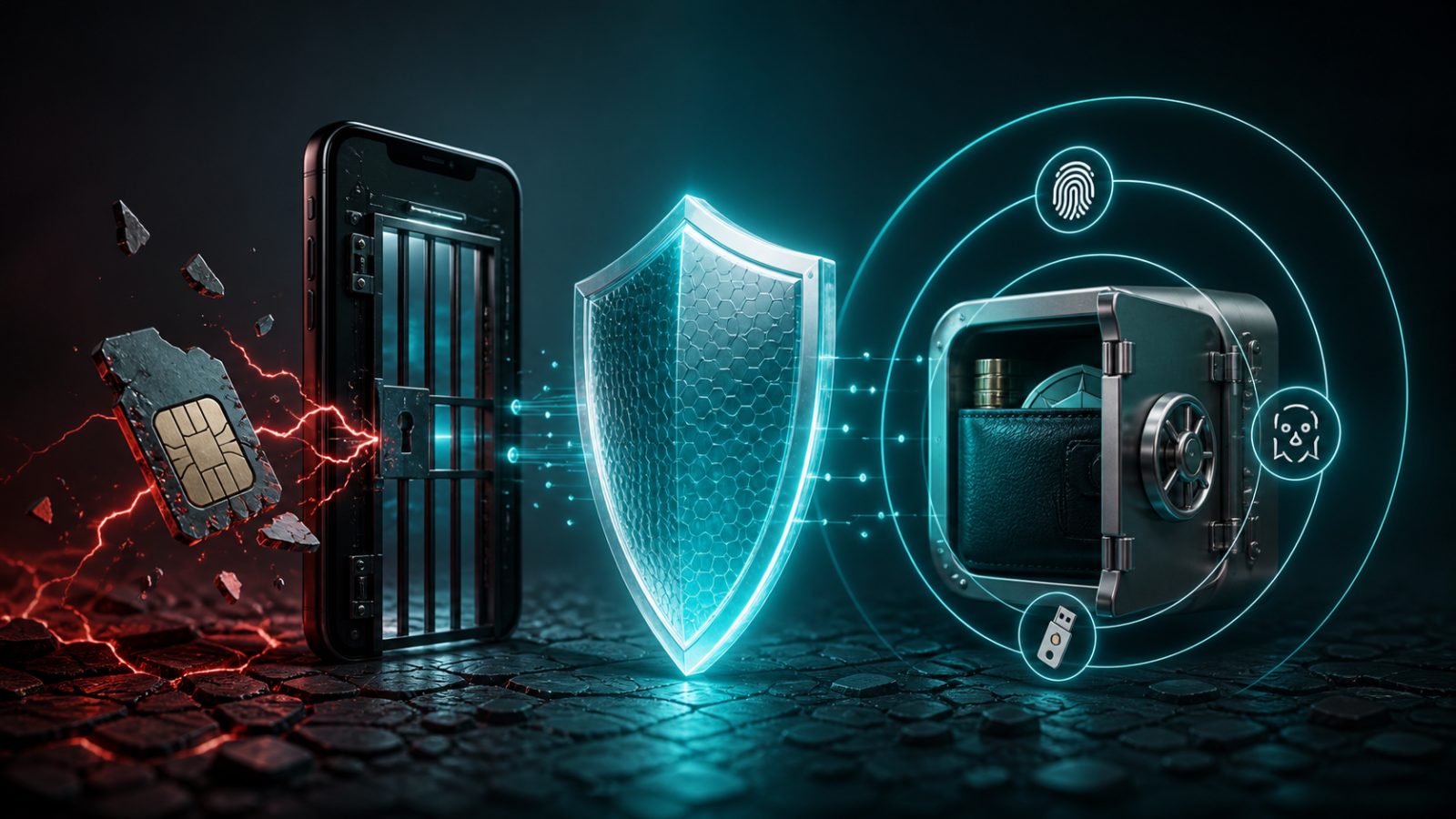
SIM swapping is dangerous for crypto users because an attacker can take control of a phone number and intercept SMS recovery codes. If email, exchange, or cloud storage accounts rely on SMS, the attacker can trigger password resets and reach sensitive accounts. SMS-based 2FA should be treated as minimum protection, not a strong barrier.
How does a SIM swap work?
An attacker gathers information about the victim, convinces a carrier to move the number to a new SIM, or abuses access inside the telecom chain. After the transfer, calls and SMS go to the attacker instead of the owner. Password resets come next.
The FBI warning on SIM swapping describes this scenario for digital-asset owners: the phone number becomes an entry point to email, social media, exchanges, and wallets.
Why is SMS 2FA weaker than other methods?
SMS depends on a phone number and carrier. A user can have a strong password, but if account recovery accepts SMS as a second factor, the number becomes a critical failure point. SMS is also vulnerable to social engineering and telecom-level attacks.
An authenticator app is stronger because the code is generated locally. For important accounts, phishing-resistant methods are stronger because the key verifies the real domain and does not reveal a secret to a fake page.
What does CISA recommend for MFA?
CISA’s Require Multifactor Authentication guidance ranks MFA methods by strength and places text or email codes among the weakest options. Physical security keys and phishing-resistant MFA are stronger.
For crypto accounts, that is practical: exchanges, email, password managers, and cloud backups should use the strongest available MFA, not SMS alone.
Which settings should be checked?
Check carrier PIN or port-out lock, disable SMS recovery where possible, enable security keys for email and exchanges, use unique passwords, remove seed phrases from cloud storage, and store backup codes securely. Larger holdings should be separated from everyday accounts.
It is also better not to publicly connect a phone number, email, and wallet addresses to the same identity.
What limits and risks remain?
Even strong MFA does not help if a seed phrase is exposed, a device is infected, or the user signs a malicious transaction. Carriers have different port-lock rules, and some services still force SMS support.
The goal is not zero risk. The goal is to stop the phone number from acting as the master key to crypto accounts.
Sources
- FBI SIM swap
- CISA MFA
This article is for information only and is not individual investment advice. Trading crypto carries the risk of losing your funds; results on historical data do not guarantee future results.
Check the strategy against your own data
ACARO is a terminal that executes a strategy on your own exchange account. Parameter search and backtesting on history are part of the subscription.
See pricing