
Why does an exchange hold new customers' crypto withdrawals for 48 hours?
From October 15, 2026 Japan's bitFlyer restricts crypto transfers to external addresses for 48 hours for customers who recently passed identity verification. How the limit is calculated, what kind of fraud it targets, and what it means for an honest new user.
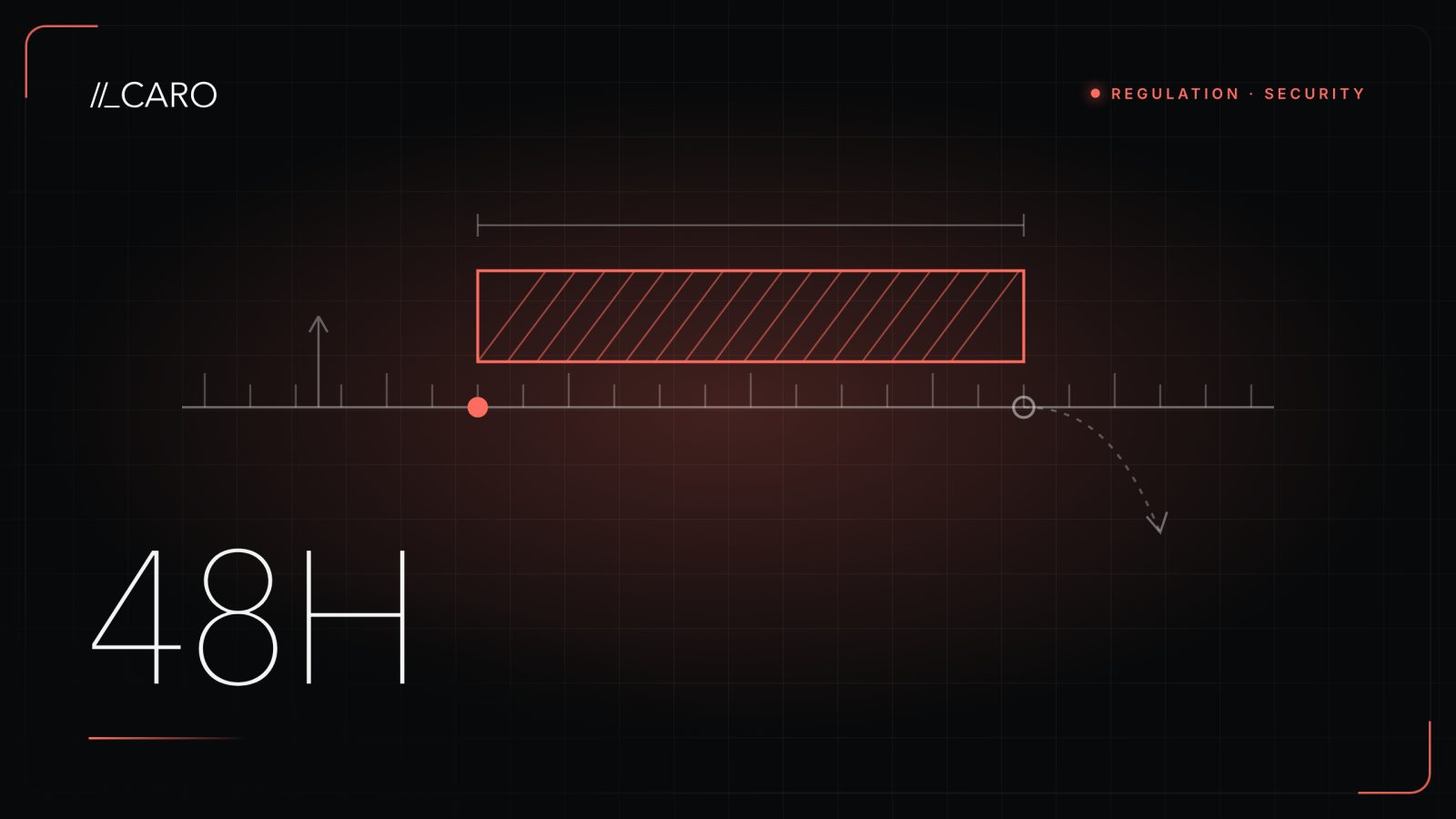
The delay gives time to notice fraud before the money leaves for an external address, where it can no longer be recovered. Japan's bitFlyer is introducing a rule called Cooldown on October 15, 2026. A customer who passed identity verification less than 90 days ago cannot, for 48 hours after a yen deposit, send crypto to an external address for the amount of that deposit minus JPY 100,000.
How is the limit calculated?
The rule is described by Crypto Briefing, citing the exchange's announcement of October 2, 2026. The restricted amount equals yen deposits over the past 48 hours minus JPY 100,000, which is about $634.
An example: a customer deposits JPY 500,000. For two days they cannot send crypto worth JPY 400,000 to an external address, and the rest is freely available. A deposit of JPY 100,000 or less is unaffected.
Each deposit has its own timer. If a customer deposits several times, the restrictions overlap. The rule applies to deposits made from October 15 onward.
What stays available during the cooldown?
The restriction covers only crypto transfers to external addresses. Buying and selling coins, depositing and withdrawing yen, and holding and receiving crypto work as usual.
For some deposit methods, such as convenience store payments and Pay-easy, the exchange already has a seven day hold. It continues separately from the new rule.
What kind of fraud does the delay target?
The exchange says the goal is to curb fraud tied to recently verified accounts, including account takeovers.
The protection relies on the difference between a bank transfer and a blockchain transfer. A bank payment can be disputed, while coins sent to an external address cannot be recalled. A fraud scheme therefore tries to finish in hours: the account is opened, yen is deposited, coins are bought and sent out. Within 48 hours the account holder, their bank or the exchange's security team have a chance to spot a problem while the funds are still on the exchange.
Why does the rule cover new accounts and amounts above JPY 100,000?
The 90 day period singles out accounts that have no transaction history yet. The JPY 100,000 threshold leaves small deposits unrestricted, so people trying the exchange with a small amount are not affected. The exchange chose both limits itself, and the report gives no rationale for the figures.
What are the limits and risks of this protection?
- Confidence fraud runs for weeks or months. A victim who trusts the other party will wait out 48 hours. A separate article covers these schemes: scam centers and confidence fraud.
- The limit can be bypassed with patience or by splitting deposits: amounts up to JPY 100,000 fall outside the rule.
- A new user who wants to move coins to their own wallet right away keeps them on the exchange for two days.
- bitFlyer has published no fraud statistics, so the rule's effect cannot be measured yet.
- This is one exchange's rule. Other platforms have different periods and thresholds, and some have no delay at all.
Sources
- Crypto Briefing. Japan's bitFlyer adds 48-hour crypto transfer cooldown for new accounts — https://cryptobriefing.com/bitflyer-48-hour-crypto-transfer-cooldown/
This article is for information only and is not individual investment advice. Trading crypto carries the risk of losing your funds; results on historical data do not guarantee future results.
Check the strategy against your own data
ACARO is a terminal that executes a strategy on your own exchange account. Parameter search and backtesting on history are part of the subscription.
See pricing