
How do banks settle with each other using a token that exists for a few seconds?
Roughrider Coin is minted for a single interbank payment and burned as soon as it reaches the recipient. How the settlement runs, where the dollars sit in the meantime, and why blockchain speed is not yet the speed of the money.
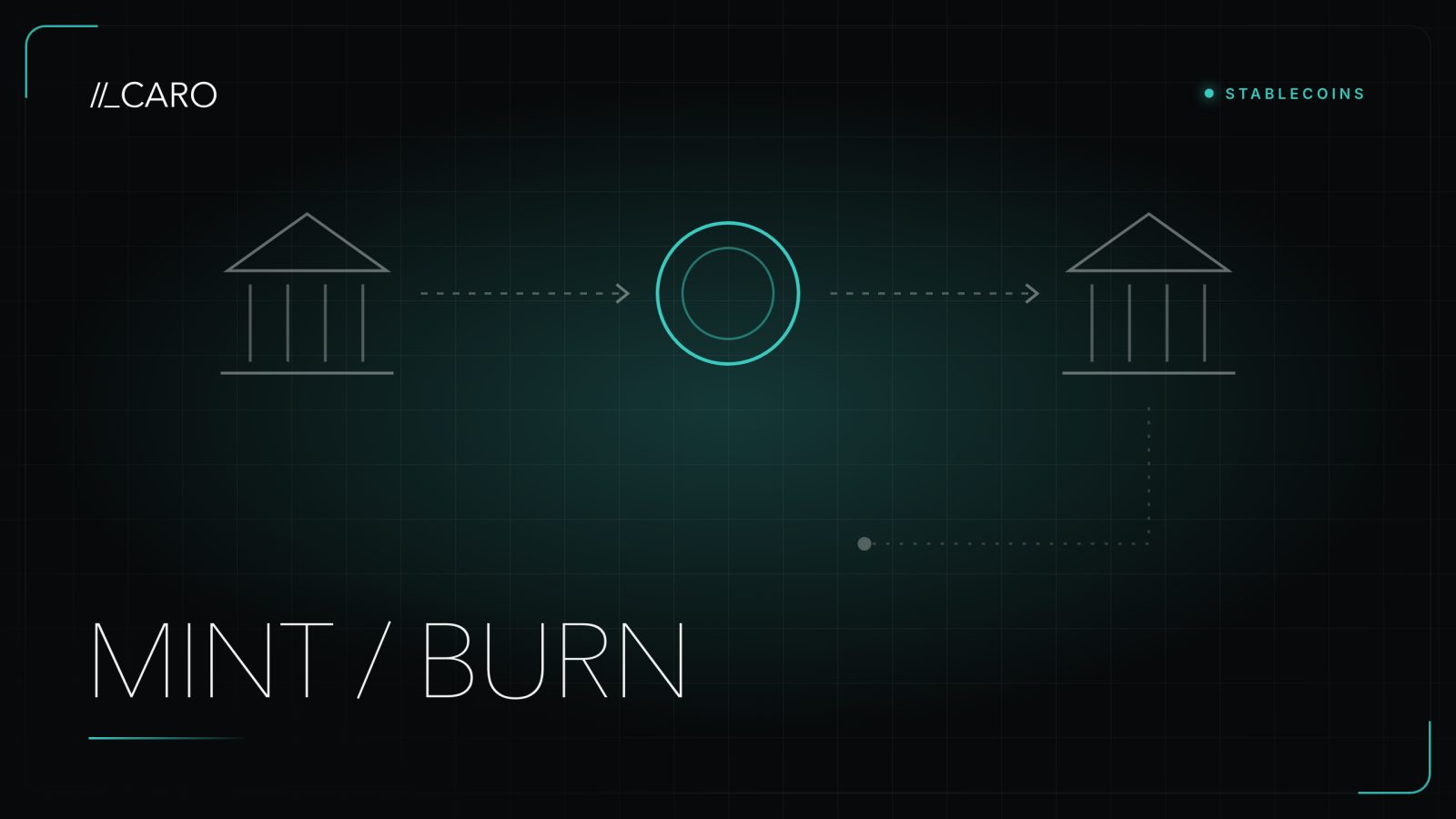
The sending bank places dollars with the issuer, the issuer mints the same amount in tokens, the tokens move to the receiving bank on a blockchain and are burned at once, and the recipient is credited with ordinary dollars. This is Roughrider Coin, which Fiserv launched on October 1, 2026 for more than 90 North Dakota banks and credit unions. How fast it settles depends on how quickly the dollars arrive after the burn.
What did Fiserv launch, and who takes part?
Fiserv announced that its Digital Asset Platform is live with clients. The first use case on the platform is Roughrider Coin, a dollar token for settlement between the state's banks. The roles are split as follows:
- VersaBank USA, an OCC-chartered bank, mints and burns the tokens and manages the reserves;
- Bank of North Dakota oversees the program but is not the issuer;
- Fiserv runs the platform, and banks reach the token through its Commercial Center system;
- Fireblocks provides wallets and tokenization;
- transactions run on Solana.
Retail customers cannot buy the token: it is restricted to financial institutions.
How does a single payment run?
The sequence is described in a crypto.news analysis:
- The sending bank moves ordinary dollars to its FBO ("for benefit of") account at VersaBank.
- Once the funds are confirmed, the issuer mints tokens one to one with the dollars.
- The tokens move to the recipient on Solana.
- Receipt triggers an automatic burn.
- The burn starts off-chain settlement through ACH and daily netting against a concentration account at Bank of North Dakota.
Why use a token if the dollars still travel through ACH?
The token carries the payment confirmation between banks around the clock and does not depend on ACH or wire operating hours. Bank of North Dakota contrasts near-instant settlement at any hour with legacy systems and their cutoff times.
The crypto.news author points to a gap in that logic. If the token crosses the chain in seconds but the recipient can use the dollars only after an ACH cycle, the practical benefit is smaller than the headline suggests. The same author notes that a faster payment that requires a bank to keep more idle dollars may not be cheaper for every community bank.
How is this token different from USDT or USDC?
Roughrider Coin is a permissioned token on a public chain. Solana validators process transactions under the network's general rules. The issuer's token rules and participant onboarding decide who can hold and move the token.
The token has freeze and clawback functions. A freeze is used for suspected fraud or sanctions compliance, and a clawback corrects erroneous transfers. The token does not circulate freely: it appears for a specific payment and disappears on receipt.
What are the limits and risks of this design?
- 90 is the number of institutions with access. How many of them send payments, the daily volume, and the share of failed transactions have not been published.
- Mints and burns are visible on chain. The FBO accounts and the moment dollars are credited cannot be verified from Solana data.
- There is an interval between the burn and the dollar credit. It has not been publicly described which party owes the recipient dollars during that time.
- Participant contracts, the procedure if one of them becomes insolvent, and the scope of deposit insurance have not been disclosed.
- Because of freeze and clawback, a token transfer can be reversed by whoever governs the program.
Sources
- Fiserv. Digital Asset Platform Goes Live with Financial Institution Clients — https://investors.fiserv.com/news-releases/news-release-details/fiserv-digital-asset-platform-goes-live-financial-institution
- FF News. Fiserv Launches Digital Asset Platform with Bank of North Dakota's Roughrider Coin — https://ffnews.com/news/fiserv-digital-asset-platform-goes-live-with-financial-institution-clients-advan-fac5d484
- crypto.news. North Dakota's bank coin runs on Solana. Follow the dollar back — https://crypto.news/north-dakotas-bank-coin-runs-on-solana-follow-the-dollar-back/
This article is for information only and is not individual investment advice. Trading crypto carries the risk of losing your funds; results on historical data do not guarantee future results.
Check the strategy against your own data
ACARO is a terminal that executes a strategy on your own exchange account. Parameter search and backtesting on history are part of the subscription.
See pricing