
How Is "$806 Million in Liquidations in 24 Hours" Counted, and Why Is the Figure Incomplete?
On October 3 an aggregator reported $806 million in futures liquidations over 24 hours. Here is what goes into that total, why it measures position notional and not money lost, and what exchange public feeds leave out.
A daily liquidation total is the summed notional value of futures positions that exchanges closed by force because margin ran short. Aggregators compile it from exchange public data feeds. The figure is incomplete for two reasons: it shows the size of positions and not the money traders lost, and some exchanges do not send every liquidation to the public feed. The $806 million for October 3, 2026, is a lower bound with an unknown error.
What was reported on October 3?
According to the aggregator MyToken, as quoted by KuCoin News, $806 million in crypto futures positions were liquidated in the 24 hours to October 3, 2026. Bitcoin accounted for $282 million, Ethereum for $178 million, Solana for $36.65 million and XRP for $24.34 million. The four named assets add up to about $521 million, and the remaining $285 million or so belongs to other coins.
The report gives no split between longs and shorts, no count of liquidated accounts and no list of exchanges.
What exactly goes into the total?
Position notional, meaning the number of contracts multiplied by the price. Notional and a trader's loss are different quantities. A trader using 20x leverage opens a $100,000 position by posting $5,000 of margin. On liquidation, $100,000 goes into the tally, while the trader loses about $5,000.
So a headline saying "$806 million liquidated" does not mean traders lost $806 million. How much margin was lost depends on the leverage of each position, and public feeds do not carry that data. How an exchange sets the moment of liquidation and where leftover margin goes is covered in "How Does Liquidation Price Differ From Bankruptcy Price?".
Where do aggregators get the data?
From exchange public feeds. An exchange reports forced orders through its API, and the aggregator subscribes to the feeds of several venues and sums the messages.
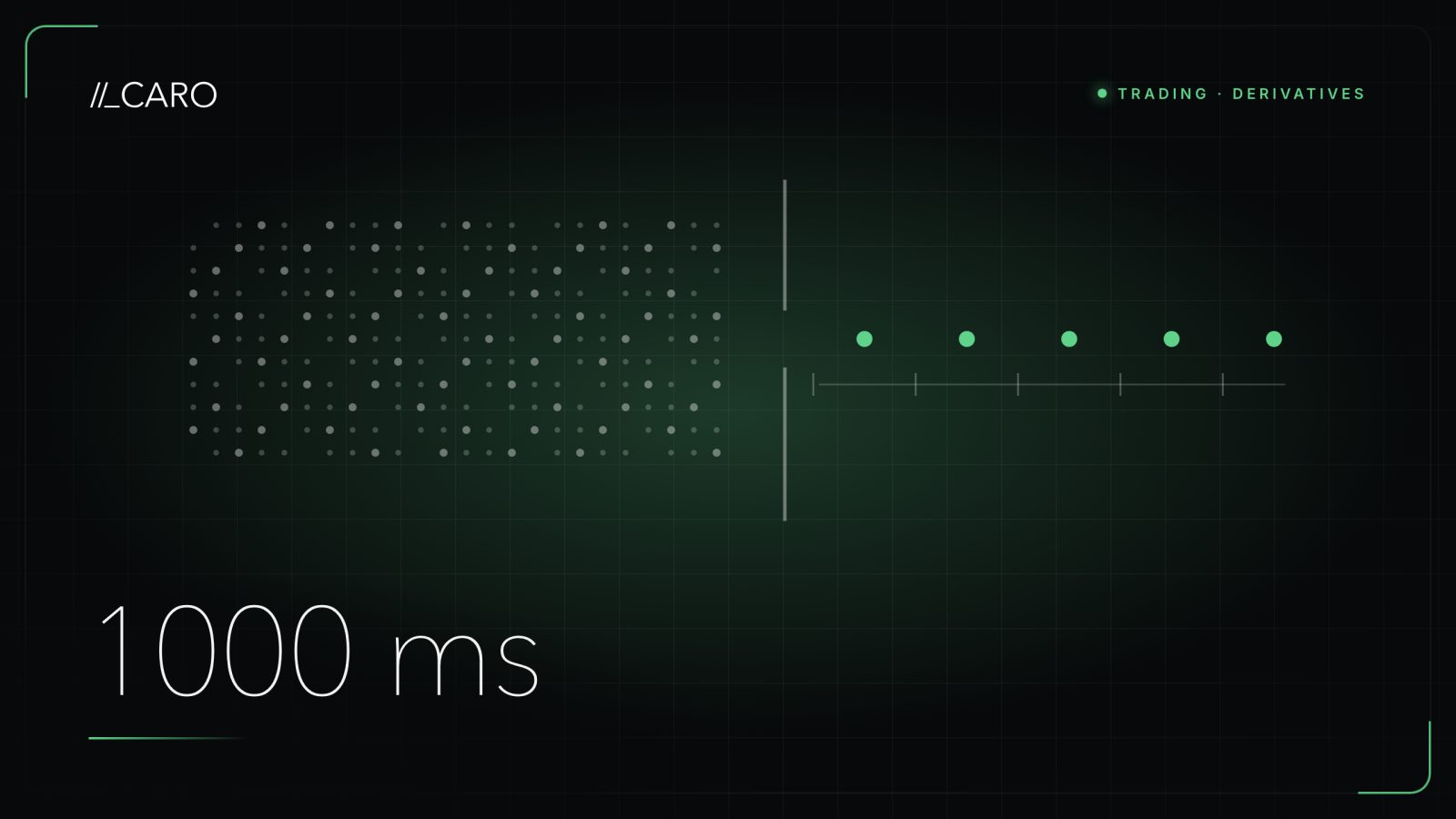
How complete a feed is depends on the exchange. Binance's documentation for USDT-margined futures states that for each symbol only one liquidation order within 1,000 milliseconds is pushed to the stream as a snapshot. If fifty BTCUSDT positions are force-closed in one second, a subscriber sees one.
In quiet hours the limit changes almost nothing: liquidations are rare and seldom land in the same second. In a sharp price move they come in bursts, and then a small share reaches the feed. The understatement is largest on the very days when the figure draws the most attention.
Why do different aggregators report different figures?
There are three reasons. Aggregators cover different sets of exchanges, and a venue missing from the list is missing from the total. The "24 hours" window can be rolling or tied to a calendar day in a particular time zone: the KuCoin News item is dated in UTC+8. And exchanges with a limited feed are added together with exchanges that publish every liquidation, although their completeness differs.
A practical reading rule follows: figures from one aggregator can be compared across days. Comparing totals from different sources, or inferring the absolute size of losses from one figure, is unreliable.
What limits and risks should you keep in mind?
- A liquidation total describes the past 24 hours. It does not predict price direction: after large liquidations the market has both reversed and kept going.
- Without a long and short split, the total does not show which side was hit.
- The size of the understatement is unknown. The documentation describes the feed rule but does not say how many liquidations were left out.
- The MyToken data is quoted from a news feed. The source does not disclose the aggregator's method or its list of exchanges.
- Leveraged trading can wipe out the entire margin in a single price move. Statistics on other traders' liquidations do not reduce that risk for your own position.
Sources
- KuCoin News (данные MyToken) — $806 million in crypto futures liquidations in 24 hours — https://www.kucoin.com/news/flash/data-806m-in-crypto-futures-liquidations-in-24-hours
- Binance Developers — Liquidation Order Streams (USDⓈ-M Futures) — https://developers.binance.com/docs/derivatives/usds-margined-futures/websocket-market-streams/Liquidation-Order-Streams
- ACARO — Чем цена ликвидации отличается от цены банкротства? — https://acaro.xxx/ru/blog/liquidation-price-vs-bankruptcy-price-insurance-fund
This article is for information only and is not individual investment advice. Trading crypto carries the risk of losing your funds; results on historical data do not guarantee future results.
Check the strategy against your own data
ACARO is a terminal that executes a strategy on your own exchange account. Parameter search and backtesting on history are part of the subscription.
See pricing