
What Happens to Memecoin Trading When a Network Stops Paying Users' Fees?
On September 29, Robinhood Chain ended its 90-day gas subsidy for users of its wallet. Within a week, protocol fees on the network fell about 31%, and fees at the memecoin launchpad fell 43%. Here is what activity free gas creates and what remains without it.
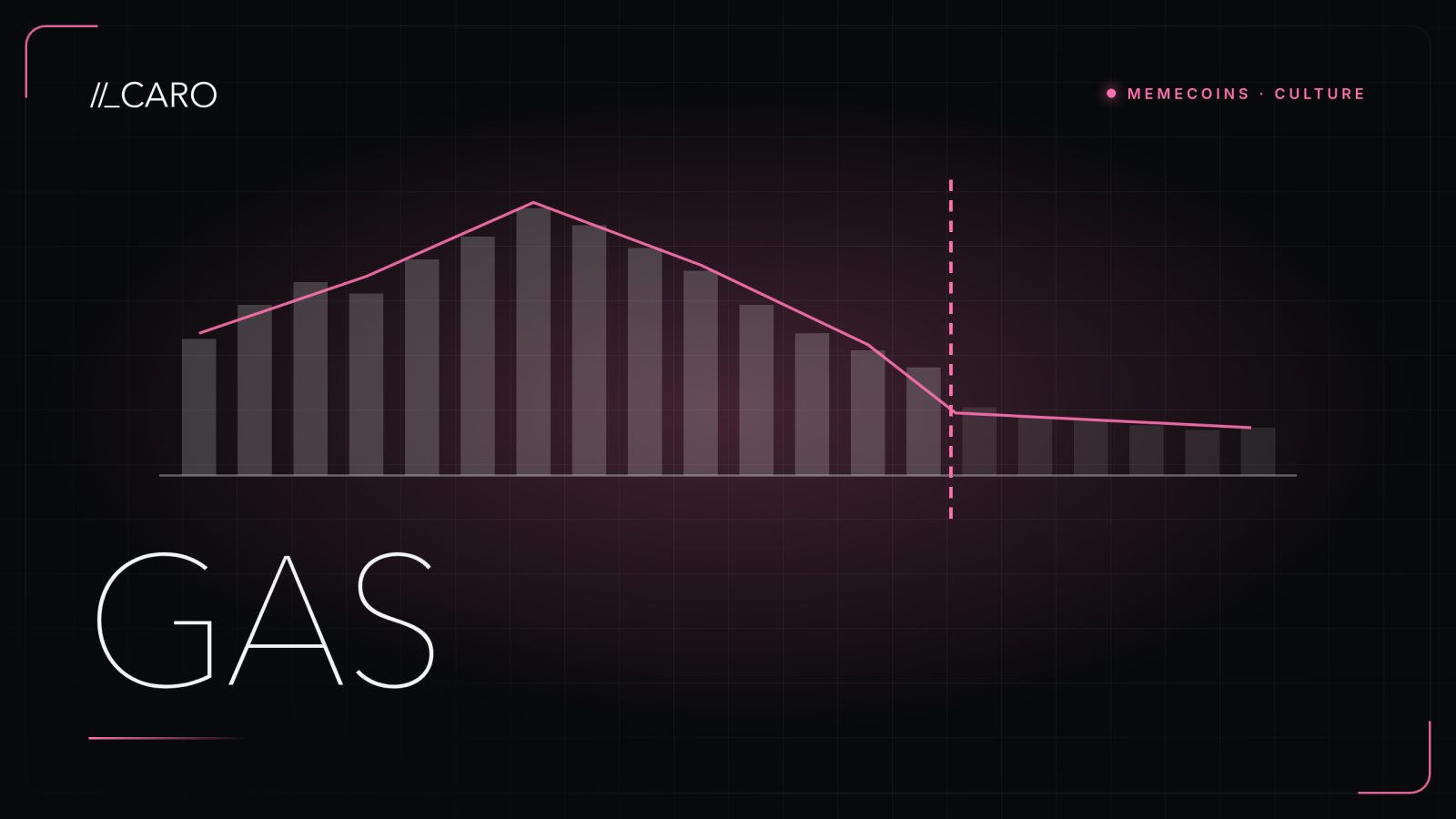
When a network stops paying gas for its users, the first activity to shrink is the kind that only made sense when an attempt was free: serial launches of new tokens and frequent small trades by bots. On Robinhood Chain the subsidy ended on September 29, 2026. Over the following week, protocol fees on the network fell about 31% and fees at the memecoin launchpad Pons fell 43%. Total value locked stayed above $1 billion.
How did the gas subsidy work?
Robinhood Chain is an Ethereum layer 2 network built on the Arbitrum Orbit stack. It went live on July 1, 2026, and was designed for round-the-clock trading of tokenized stocks. For the first 90 days, until September 29, the network paid transaction fees for Robinhood Wallet users, CryptoTicker writes. Since that date every transaction again requires a fee in ETH.
The subsidy covered gas only, meaning the network's charge for including a transaction. Application fees (the launchpad's fee for creating a token, a DEX's fee for a swap) were paid by users during the subsidy as well.
What activity does free gas create?
A free transaction changes the math for anyone making many attempts with a small expected return. A memecoin creator can launch dozens of tokens looking for one that catches on. A bot can make thousands of small trades. With paid gas each attempt costs money, and some of those strategies stop paying for themselves.
The Robinhood Chain figures show the scale. According to DefiLlama data collected by CryptoTicker as of September 28, about 646,000 tokens were created on the Pons launchpad from July through September, and Pons fees over 30 days came to $146.35 million. Fees across all protocols on the network over the same 30 days reached $373.11 million. By October 1 the share of tokenized assets in the network's total value locked had dropped to 6% from about one third at launch, according to another CryptoTicker overview. A network built for stocks became a venue for memecoins.
What changed after September 29?
CryptoTicker's data as of October 1 puts seven-day protocol fees on the network at about $35.1 million, roughly 31% below the week before. Weekly fees at Pons fell from $19.5 million to $11.2 million, or 43%. Total value locked held near $1.03 billion.
The launchpad was hit harder than the network as a whole. That fits the idea that launching new tokens depends on the cost of an attempt more than trading existing ones does.
Why can the subsidy alone not explain the decline?
Activity was cooling before the cutoff. As of September 28, average protocol fees for the month were $12.44 million a day, while for the final week they were $5.93 million a day. CryptoTicker states directly that the cooling began before the subsidy ended. The peak came in early September: on September 2 about 25,000 tokens were created on Pons in a day against a typical 10,000, KuCoin News reported.
So the drop after September 29 mixes two causes: a general fall in interest in this network's memecoins and the arrival of a gas charge. Weekly data cannot separate them.
What limits and risks should you keep in mind?
- There is little data from after the subsidy ended: only the first days. The weekly comparison also includes days when the subsidy was active.
- All figures come from DefiLlama as relayed by one outlet and refer to protocol fees. The sources give no transaction or active address counts.
- High launchpad fees mean users paid a lot to create and buy tokens. They say nothing about how buyers fared.
- A memecoin launched under free gas may be left with a thin liquidity pool once the subsidy is gone. In a thin pool, selling a meaningful amount moves the price sharply.
- The network shares a name with the broker, but the broker does not vet the tokens on it. Memecoins carry no rights to income or assets, and money put into them can be lost entirely.
Sources
- CryptoTicker — Robinhood Chain: Ecosystem, Fees, end of free gas (данные DefiLlama на 28.09.2026) — https://cryptoticker.io/en/robinhood-chain-ecosystem-end-of-free-gas/
- CryptoTicker — Robinhood Chain and the Memecoins: The Complete Guide (October 2026) — https://cryptoticker.io/en/robinhood-chain-memecoins-explained/
- KuCoin News — Robinhood Chain Ends Free Gas Subsidy in Late September, Memecoins Face Stress Test — https://www.kucoin.com/news/flash/robinhood-chain-ends-free-gas-subsidy-in-late-september-memecoins-face-stress-test
This article is for information only and is not individual investment advice. Trading crypto carries the risk of losing your funds; results on historical data do not guarantee future results.
Check the strategy against your own data
ACARO is a terminal that executes a strategy on your own exchange account. Parameter search and backtesting on history are part of the subscription.
See pricing