
Why can a public wallet address become a privacy risk?
A public wallet address can become a privacy risk because many blockchains reveal transfer history, dApp links, balance size and user behavior. Even without a real name, an address can be linked to exchanges, social profiles, NFTs, donations or repeated patterns. Privacy requires its own hygiene.
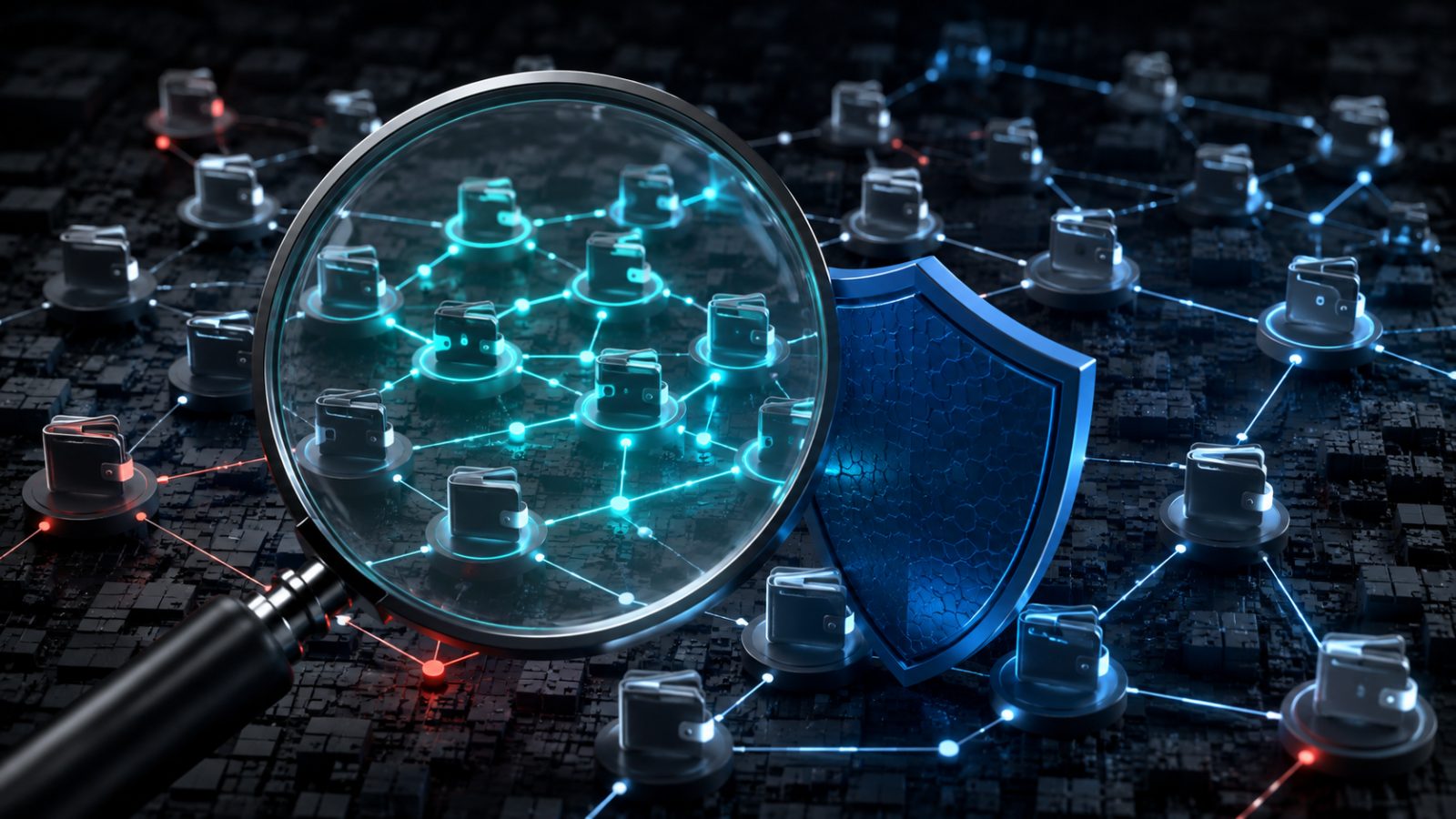
A public wallet address can become a privacy risk because many blockchains reveal transfer history, dApp links, balance size and user behavior. Even without a real name, an address can be linked to exchanges, social profiles, NFTs, donations or repeated patterns. Privacy requires its own hygiene.
Why is an address not full anonymity?
Many blockchains are public by design. That helps transaction verification, reserve audits and protocol transparency. For private users, the same transparency can reveal too much: when they move funds, which contracts they use, which assets they hold and how often they act.
If the same address is used for storage, trading, NFTs, donations and testing, it becomes a financial profile. Once it is linked to a person, past and future operations become easier to interpret.
Why is this connected to security?
Chainalysis' 2026 crypto scam review describes how scammers use persuasive stories, social engineering and trust imitation. If an attacker can see wallet balance and activity, the attack can become more personal.
CertiK's Hack3D H1 2026 Report also highlighted wallets and key compromise as major loss sources. Privacy and security are directly connected: the less unnecessary information is exposed, the harder targeted attacks become.
Which habits help?
First, separate wallets by purpose. One for long-term storage, another for DeFi, a third for experiments. Second, do not post an address where it can easily be linked to identity unless needed.
Third, do not use the main wallet for new dApps and airdrops. Fourth, check token approvals regularly. Fifth, remember that transfers between your own addresses can connect them into one graph.
What are the limits and risks?
Privacy does not mean hiding illegal activity. Users should follow the rules of their jurisdiction, tax duties and platform requirements. The goal is sensible reduction of unnecessary exposure, not law avoidance.
Full privacy is difficult. Exchanges, bridges, dApps, IP traces, public profiles and repeated amounts can connect addresses. Promises of "absolute anonymity" in crypto are usually dangerous.
How can basic privacy be built?
Start with simple steps: separate wallets, careful signatures, bookmarks for verified sites, few public addresses on social media, no balance screenshots and caution with donations from the main address.
Blockchain transparency is a strength of the infrastructure, but it requires awareness from users. A wallet address is not just a string. It is a trail that can reveal more than expected.
Sources
- Chainalysis scams
- CertiK H1 2026
- Privacy hygiene
This article is for information only and is not individual investment advice. Trading crypto carries the risk of losing your funds; results on historical data do not guarantee future results.
Check the strategy against your own data
ACARO is a terminal that executes a strategy on your own exchange account. Parameter search and backtesting on history are part of the subscription.
See pricing