
Why do RWAs matter in 2026 as settlement infrastructure, not just tokens?
RWAs matter not only because real assets can be issued as tokens. The main 2026 shift is the attempt to connect asset rights, custody, settlement, liquidity and DeFi tools into one infrastructure layer. Users should evaluate what stands behind the token, not only the token wrapper.
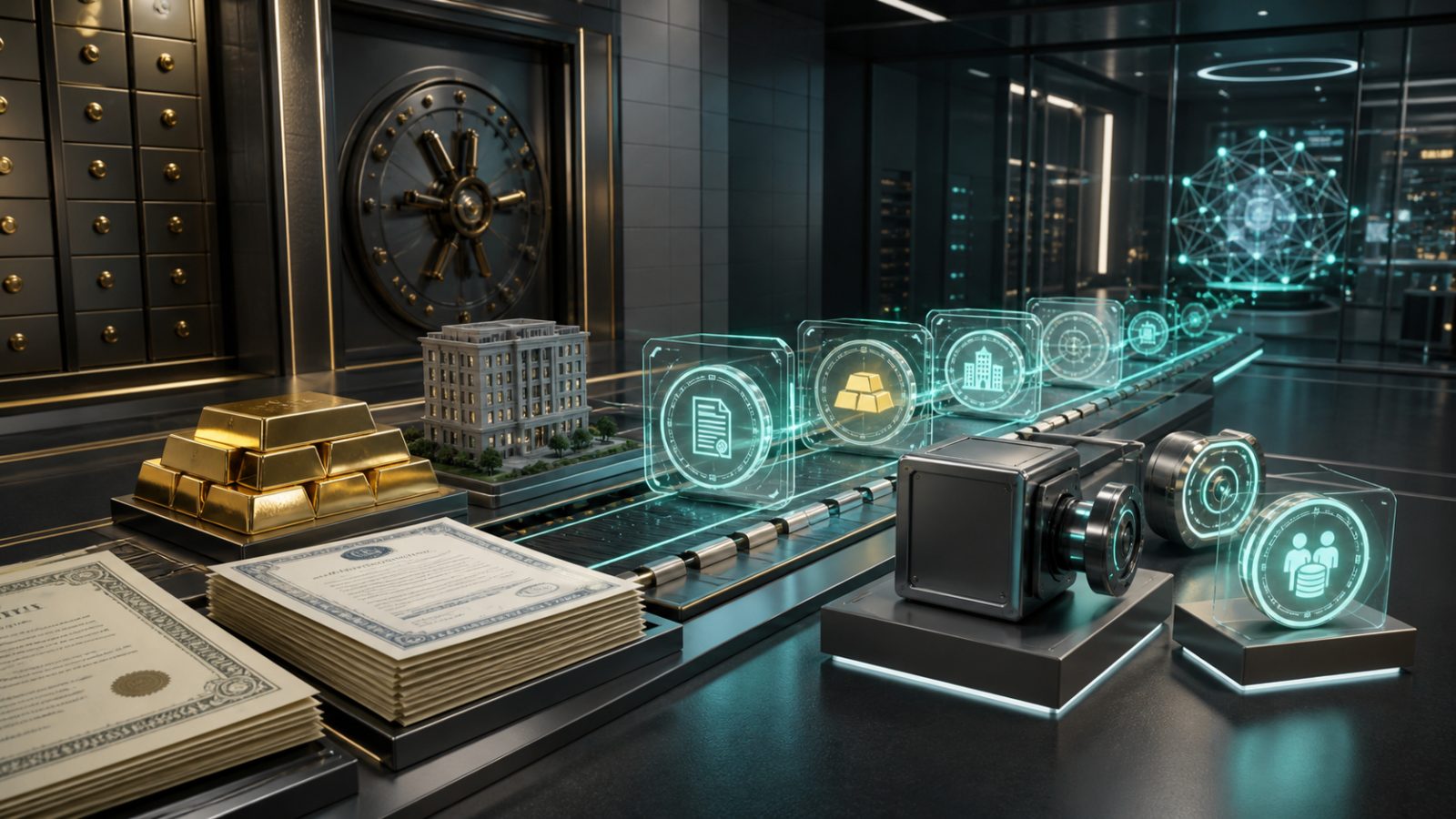
RWAs matter not only because real assets can be issued as tokens. The main 2026 shift is the attempt to connect asset rights, custody, settlement, liquidity and DeFi tools into one infrastructure layer. Users should evaluate what stands behind the token, not only the token wrapper.
What changes when an asset becomes a token?
Tokenization makes an asset programmable: it can be transferred faster, used in settlement, connected to DeFi and tracked on shared infrastructure. But the token itself does not create value. It must be linked to a real right, reserve, contract, custodian and clear redemption process.
That connection separates a mature RWA product from a tokenized label. When a user sees tokenized gold, a fund or an equity, the first question should not be "how fast does it trade?" but "what right does the holder actually receive?"
Why does sector growth not mean equal asset quality?
CoinGecko's RWA Report 2026 showed that tokenized real-world assets grew significantly, while Treasuries, commodities, equities and funds developed at different speeds. This matters because RWA is not one risk category, but a set of very different markets.
Tokenized Treasuries may depend on rates and fund structure. Tokenized gold depends on custody and reserves. Tokenized equities depend on legal rights, trading hours, corporate actions and redemption access. A similar interface does not mean similar protection.
How are RWAs connected to DeFi?
When a tokenized asset enters DeFi, it can become collateral, a settlement asset or part of a yield strategy. That increases utility, but it adds smart-contract and liquidity risk. The asset can be sound on its own, yet weak as collateral if its market is thin.
DefiLlama Research increasingly frames RWA stories through infrastructure, user retention, liquidity and real use cases rather than issuance size alone. That is a more mature way to read the sector.
What limits and risks do RWAs have?
The main risks sit between blockchain and the real world. Who holds the asset? Who maintains the register? What happens if the issuer fails? Can the token be redeemed? Who receives income or corporate actions? What happens when the token trades 24/7 but the underlying market is closed?
Liquidity is another risk. A token may appear available inside an app, but a large sale can reveal a thin order book. In RWA, this is especially important: the underlying asset can be high quality while the secondary market is narrow.
How can users evaluate RWAs without hype?
A practical checklist includes holder rights, reserve or underlying asset, custodian, audit, redemption mechanism, supported networks, market depth, fees and jurisdictional limits. If one of these points is unclear, the token deserves caution.
Tokenization can make financial infrastructure faster and more open, but it does not erase ownership and accountability. A good RWA starts not with the token, but with a clear connection between the token and the real asset.
Sources
- CoinGecko RWA 2026
- DefiLlama RWA
- Tokenization rails
This article is for information only and is not individual investment advice. Trading crypto carries the risk of losing your funds; results on historical data do not guarantee future results.
Check the strategy against your own data
ACARO is a terminal that executes a strategy on your own exchange account. Parameter search and backtesting on history are part of the subscription.
See pricing