
How does tokenization change trade finance and invoice risk?
Tokenization can make trade finance faster and more transparent when rights to invoices, shipments and payments are verified before token issuance. But an invoice does not become a reliable asset just because it is recorded on-chain. The key question is who verified the goods, debtor, claim and absence of double financing.
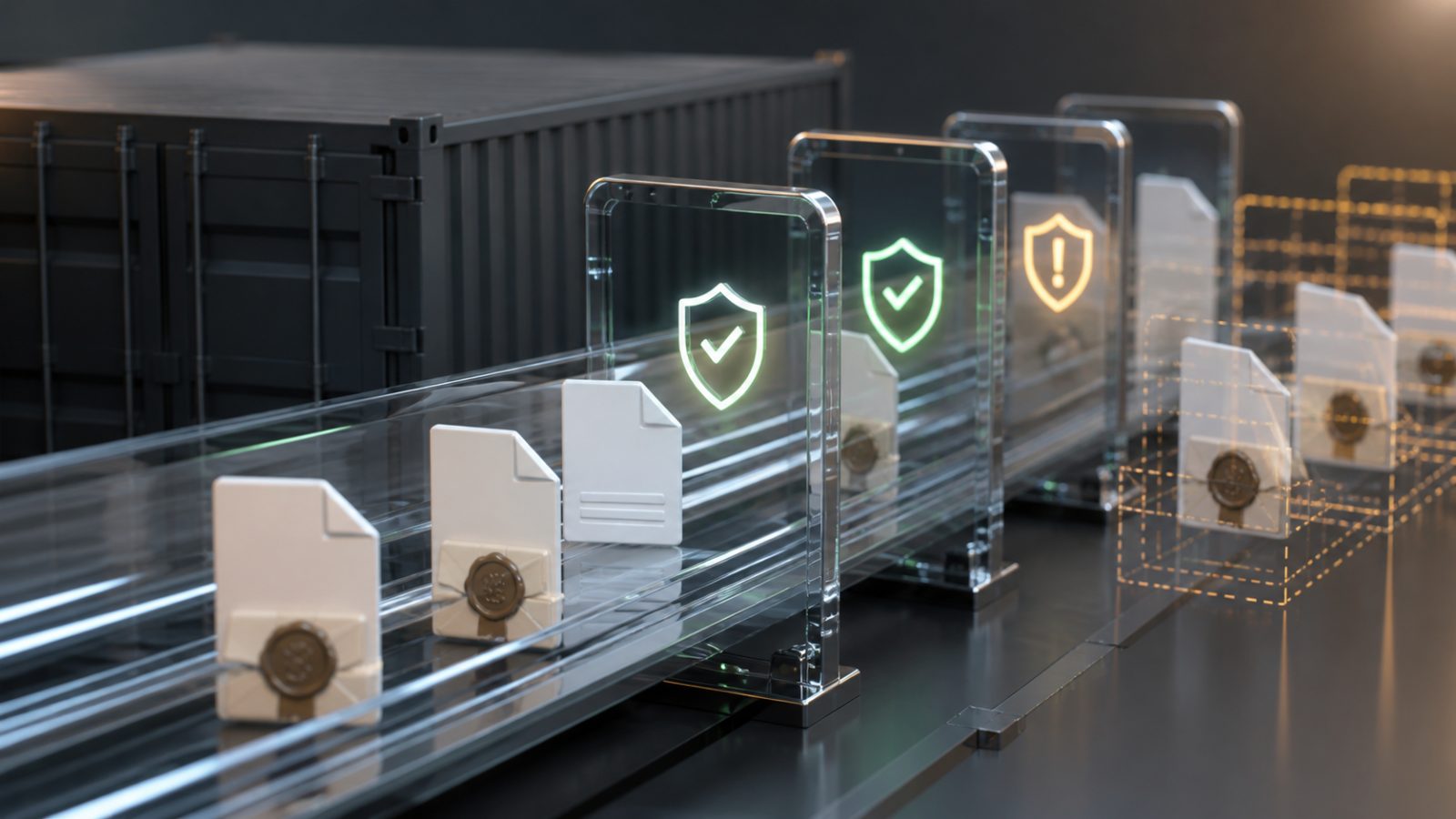
Tokenization can make trade finance faster and more transparent when rights to invoices, shipments and payments are verified before token issuance. But an invoice does not become a reliable asset just because it is recorded on-chain. The key question is who verified the goods, debtor, claim and absence of double financing.
What is trade finance in simple terms?
Trade finance helps companies finance shipments, receivables and supply chains. A supplier may ship goods, issue an invoice and wait 30 or 60 days for payment. Financing lets the supplier receive money earlier, while an investor or bank takes the risk of future payment.
The idea is simple on paper. In practice, details matter: documents, counterparties, delivery, insurance, claims, currency, sanctions checks and disputes.
What does tokenization add?
A token can make a claim more transferable and observable. It can record ownership, transfer rules, payment history and investor access. The IMF notes that tokenized finance can reduce friction, but it depends on the connection between tokens and real rights: IMF Tokenized Finance.
For trade finance, that matters because the market is document-heavy and cross-border. A good digital layer can improve speed and control.
Where does double-financing risk appear?
The same invoice can be shown to multiple lenders if there is no shared registry and verification. Tokenization can help when issuance is tied to reliable checks. But if someone tokenizes a document without control, the blockchain only preserves bad information.
That is why oracles, delivery documents, debtor confirmation, provenance audits and legal linkage matter. The token should appear after verification, not instead of it.
Why does a real-world asset not become simple?
On-chain records can move quickly. The actual buyer payment, goods quality, delivery dispute and debtor insolvency remain off-chain. If the debtor does not pay, the token does not turn a dispute into instant cash.
Liquidity is another layer. A tokenized invoice may be transferable, but the secondary market will be limited if participants do not understand the risk.
Where are the limits and risks?
The first risk is data quality. A wrong invoice, fake document or weak debtor check makes the token a dangerous wrapper.
The second risk is legal enforceability. Users need to understand who owns the claim and what happens after default.
The third risk is concentration. If an invoice portfolio depends on one buyer or industry, diversification may be an illusion.
Tokenized trade finance is promising not because everything becomes on-chain, but because a verified off-chain process can gain a faster and more transparent record layer.
Sources
- IMF tokenization
- Trade finance risk
- Invoice verification
This article is for information only and is not individual investment advice. Trading crypto carries the risk of losing your funds; results on historical data do not guarantee future results.
Check the strategy against your own data
ACARO is a terminal that executes a strategy on your own exchange account. Parameter search and backtesting on history are part of the subscription.
See pricing