
How Is a Tokenized Stock Priced at Night and on Weekends When the Exchange Is Closed?
NYSE is building a venue for round-the-clock trading in tokenized stocks, and on September 23 Blockchain.com signed an MOU to access it. We explain where a token's price comes from when the primary session is closed, why spreads widen and what happens at Monday's open.
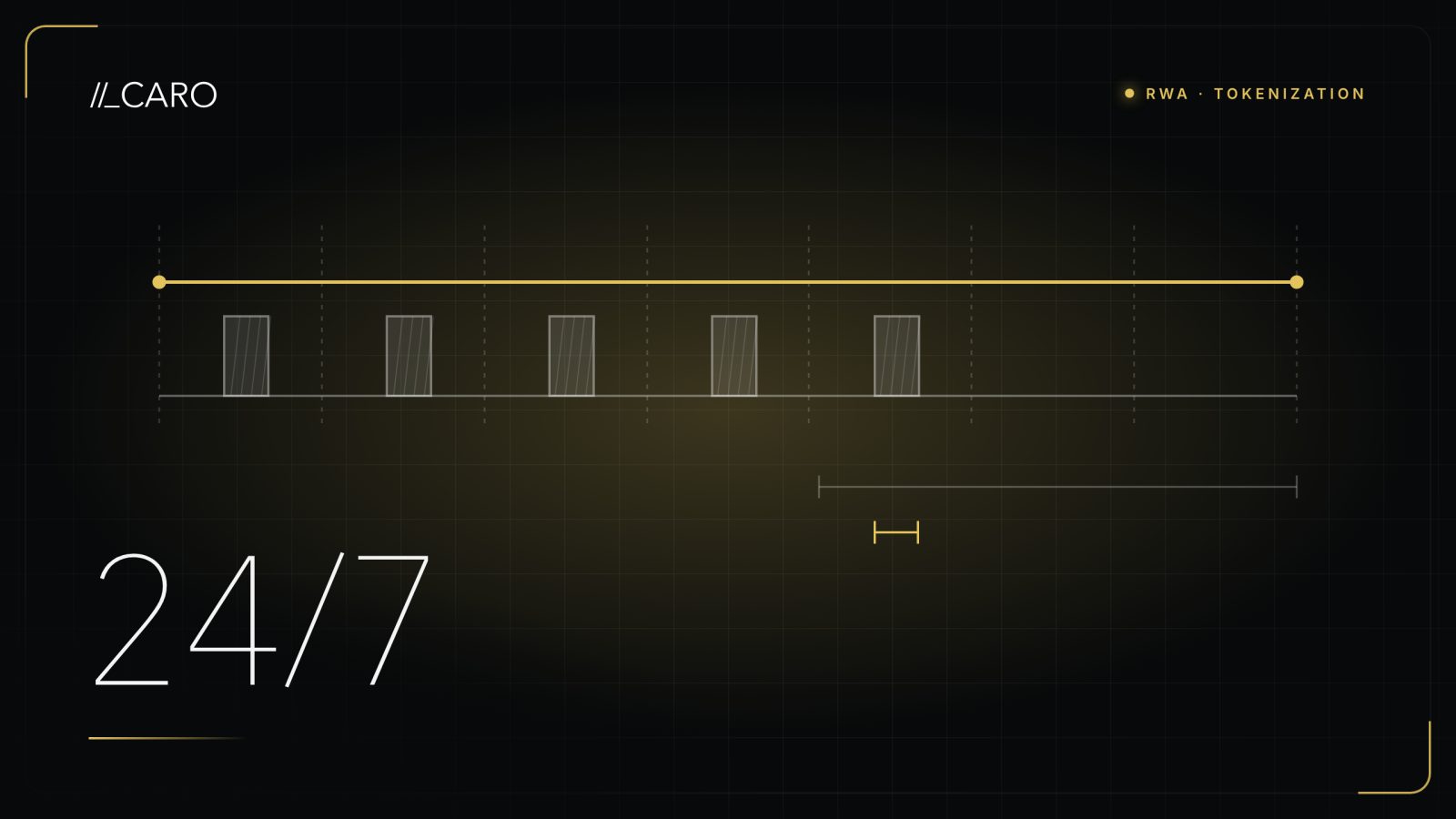
When the listing exchange is closed, a tokenized stock has no live quote to anchor to. Its price is set by market makers and buyers on the token venue, based on the last close, the news and whatever hedging instruments are available. That is why overnight and weekend spreads are usually wider, depth thinner, and why a token can jump to catch up with the stock when the regular session opens.
What happened this week?
On September 23 Blockchain.com and NYSE signed a memorandum of understanding to give Blockchain.com users access to tokenized US stocks and ETFs via NYSE's digital venue, The Block reports. No launch date or financial terms were disclosed, and the venue still needs regulatory approval. According to ICE's press release, it is designed to run 24/7, accept stablecoin funding, settle instantly and trade tokens fungible with traditionally issued shares, including dividend and voting rights. Separately, DTCC is preparing an October 2026 launch of a service to tokenize securities already held at the depository.
How many hours a week does a token lack an anchor?
The US regular session runs from 9:30 a.m. to 4:00 p.m. New York time, five days a week: 32.5 of 168 hours, or about 19%. Even including pre-market and after-hours trading, most of the night and the whole weekend have no primary quote. During those hours the token trades while the underlying stock does not, or barely does.
Who sets the price when the exchange is closed?
Market makers on the token venue and the buyers themselves. On weeknights a market maker can partly hedge with index futures, but after selling a token on Saturday they carry the risk until Monday with almost no hedge, since the main futures markets are closed on weekends too. The weaker the hedge, the wider the spread and the smaller the size they will show. For a large, liquid stock the gap may be small; for a less liquid one it can be significant.
Regulated markets solve the same problem in a similar way. Kalshi's SEC filing for perpetual stock futures states that while the cash equity market is closed, the reference is the official closing price of the last session, and no funding is computed during those hours.
What happens at Monday's open?
If important news breaks over the weekend — earnings, sanctions, a court ruling — the token can reprice immediately while the stock waits for the open. Then prices converge: either the token was right, or the primary market opens elsewhere and token holders take the gap. The crypto version of this effect is covered in “Why do weekend perps change Monday market-opening risk?”.
Why does a fungible token track the price better?
If a token can be converted into the ordinary share and back, arbitrageurs close the gap by buying where it is cheaper and selling where it is dearer. But conversion runs during depository and broker hours. On weekends, the peg rests on expectations rather than instant arbitrage. A token without shareholder rights is anchored even more loosely — we covered that difference in our piece on the SEC's innovation exemption for tokenized stocks.
What are the limits and risks of 24/7 trading?
- Wider spreads. Buying and selling overnight can cost more than in the regular session even if the price does not move.
- Opening gaps. A weekend token price is no guarantee of Monday's stock price.
- Corporate actions. Earnings usually come after the close, and dividends and splits follow the venue's own rules — check how.
- Regulatory uncertainty. The NYSE venue and Blockchain.com access still depend on approvals; there is no launch date.
Round-the-clock trading adds access, not information: while the primary market is closed, a token's price is participants' estimate, not a quote in the underlying security.
Sources
- The Block — Blockchain.com, NYSE plan access to tokenized US stocks and ETFs (Sept 23, 2026) — https://www.theblock.co/news/web3/2026-09-23-blockchain-com-nyse-tokenized-us-stocks-etfs-416176
- ICE — The New York Stock Exchange Develops Tokenized Securities Platform — https://ir.theice.com/press/news-details/2026/The-New-York-Stock-Exchange-Develops-Tokenized-Securities-Platform/default.aspx
- DTCC — DTCC Advances Development of New Tokenization Service — https://www.dtcc.com/news/2026/may/04/dtcc-advances-development-of-new-tokenization-service
- SEC — KalshiEX notice, Release No. 34-106422 (perpetual security futures) — https://www.sec.gov/files/rules/sro/kalshiex/2026/34-106422.pdf
This article is for information only and is not individual investment advice. Trading crypto carries the risk of losing your funds; results on historical data do not guarantee future results.
Check the strategy against your own data
ACARO is a terminal that executes a strategy on your own exchange account. Parameter search and backtesting on history are part of the subscription.
See pricing